
🚨 𝗠𝟮𝟵𝟯𝗠 𝗚𝗼𝗻𝗲 𝗶𝗻 𝗠𝗶𝗻𝘂𝘁𝗲𝘀: 𝗛𝗼𝘄 𝗢𝗻𝗲 𝗕𝗿𝗶𝗱𝗴𝗲 𝗘𝘅𝗽𝗹𝗼𝗶𝘁 𝗦𝗵𝗼𝗼𝗸 𝗗𝗲𝗙𝗶’𝘀 𝗙𝗼𝘂𝗻𝗱𝗮𝘁𝗶𝗼𝗻𝘀 𝗶𝗻 𝟮𝟬𝟮𝟲.
The decentralized finance (DeFi) ecosystem just got a harsh reminder: no protocol exists in isolation. ⬇️
In what is now the largest DeFi hack of 2026, Kelp DAO’s rsETH bridge was exploited for approximately $293 million, sending shockwaves across multiple platforms and triggering emergency responses—most notably from Aave.
🔍 What Happened?
At the center of the incident is rsETH, a restaked ETH derivative used across DeFi protocols.
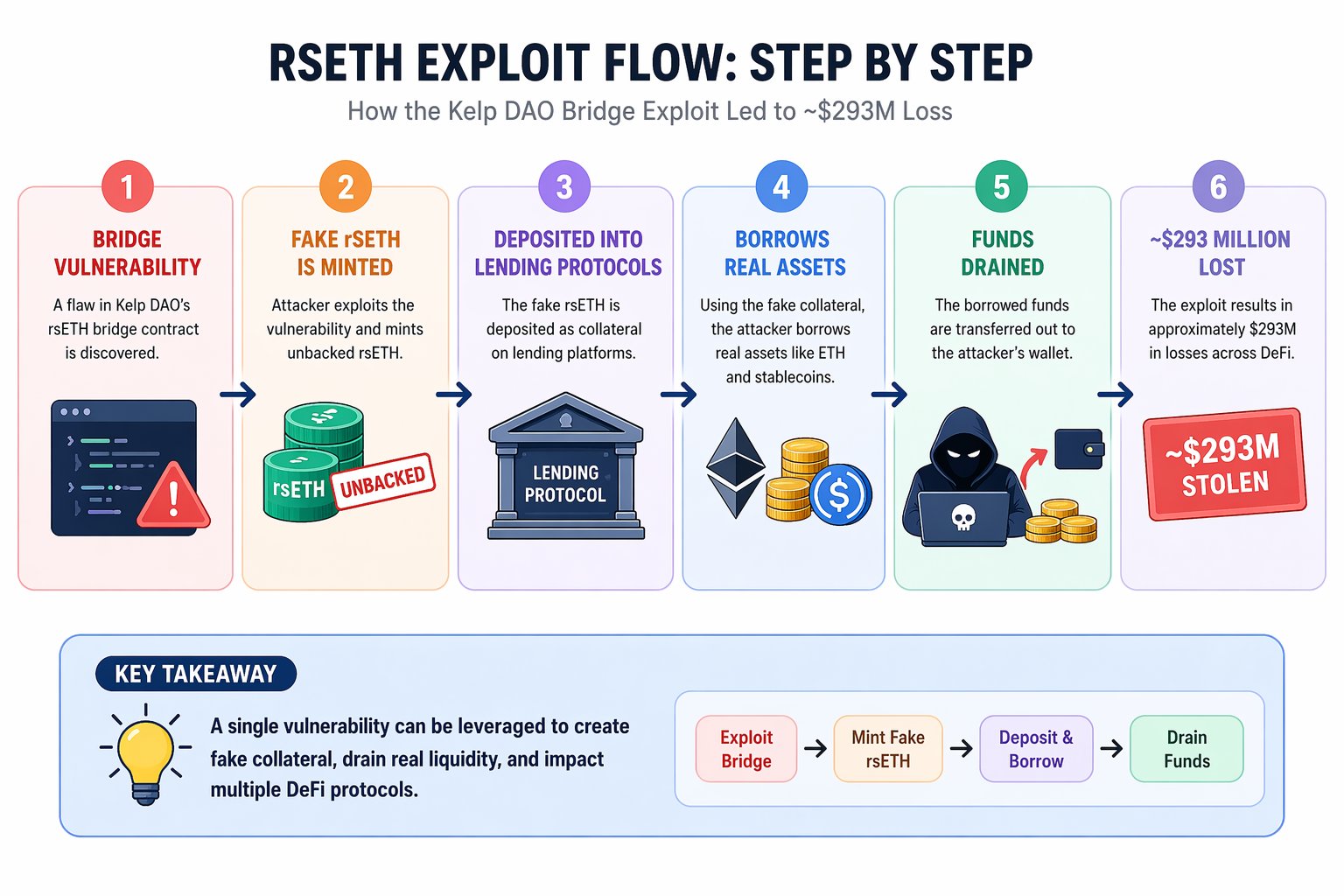
The attacker exploited a vulnerability in the bridge contract, allowing them to mint or manipulate rsETH without proper backing. ⬇️
This “unbacked collateral” was then used to borrow real, valuable assets like ETH from lending platforms.
Pictorial diagram of the exploit.⬇️
🧠 Why This Was So Dangerous
Because rsETH is integrated into multiple DeFi platforms, the exploit had a domino effect.
🛑 Aave’s Emergency Response
To prevent further damage, Aave quickly:
Froze rsETH markets on V3 and V4
Blocked new deposits and borrowing
Contained potential bad debt spillover
Important: 👉 Aave wasn’t hacked—it acted defensively to protect its ecosystem.
🌐 The Bigger Lesson: DeFi Is Deeply Interconnected. ⬇️
This incident highlights a core truth:
In DeFi, one weak link can ripple across the entire system.
Bridges, derivatives, and lending protocols are tightly coupled. When one fails:
Collateral becomes unreliable
Liquidity gets drained
Trust erodes instantly⬇️
⚠️ Key Takeaways
🔴 Bridges remain one of the most vulnerable points in crypto
🔴 Synthetic/restaked assets can introduce hidden systemic risks
🔴 Risk management (like Aave’s freeze) is critical for survival
🔴 “Code is law” doesn’t mean “code is safe”
💬 Final Thought
The Kelp DAO exploit isn’t just another hack—it’s a case study in cascading failure.
As DeFi grows more complex, the real challenge isn’t just building powerful systems…
it’s ensuring they don’t collapse together.
The End......